
Production guides
Medical Procedure Video Guide: Filming, Editing and Preparation
A production guide for hospital and clinic teams: define the audience, filming conditions, source material, deliverables and review process. Includes a brief for filming only, editing only or a combined production.
Start with the audience and where the video will be used
Internal training or record videos and videos for a public website or social channel need different coverage and explanations. Define who will watch, where it will appear and what viewers need to understand. For training, identify the required coverage and supporting material. For public use, agree the message and scenes that may be shown. This is a video-production guide, not an explanation of how to perform a procedure or of its effects.
Choose the production scope you need
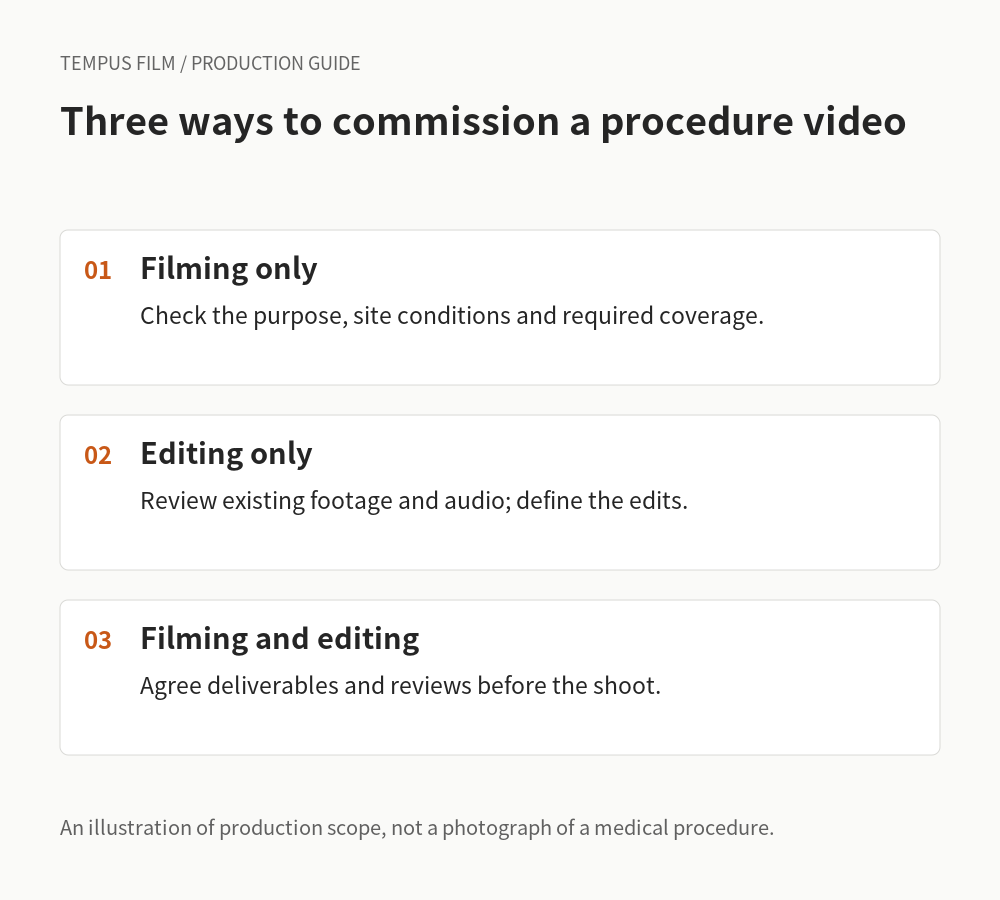
Filming only: review the site conditions and required coverage for a new shoot. Specify how footage should be transferred and whether any editing is included. Editing only: review existing footage, separate audio and supporting assets. Define the finished videos and editing scope before assessing the work. Filming and editing: agree a deliverables list before filming, then coordinate the shoot, edit and review dates.
Confirm camera positions and site operations first
Agree filming times and positions, access, equipment entry, working routes and power with the site contact. Position cameras, lights and microphones according to the site's operating requirements. Share any circumstances that could restrict or stop filming. Identify who may be filmed, which scenes may be published and which names, records or monitor details must remain out of shot. The institution should coordinate the necessary filming and publication permissions with participants, then brief the production team on permitted coverage and exclusions.
Prepare a short production brief
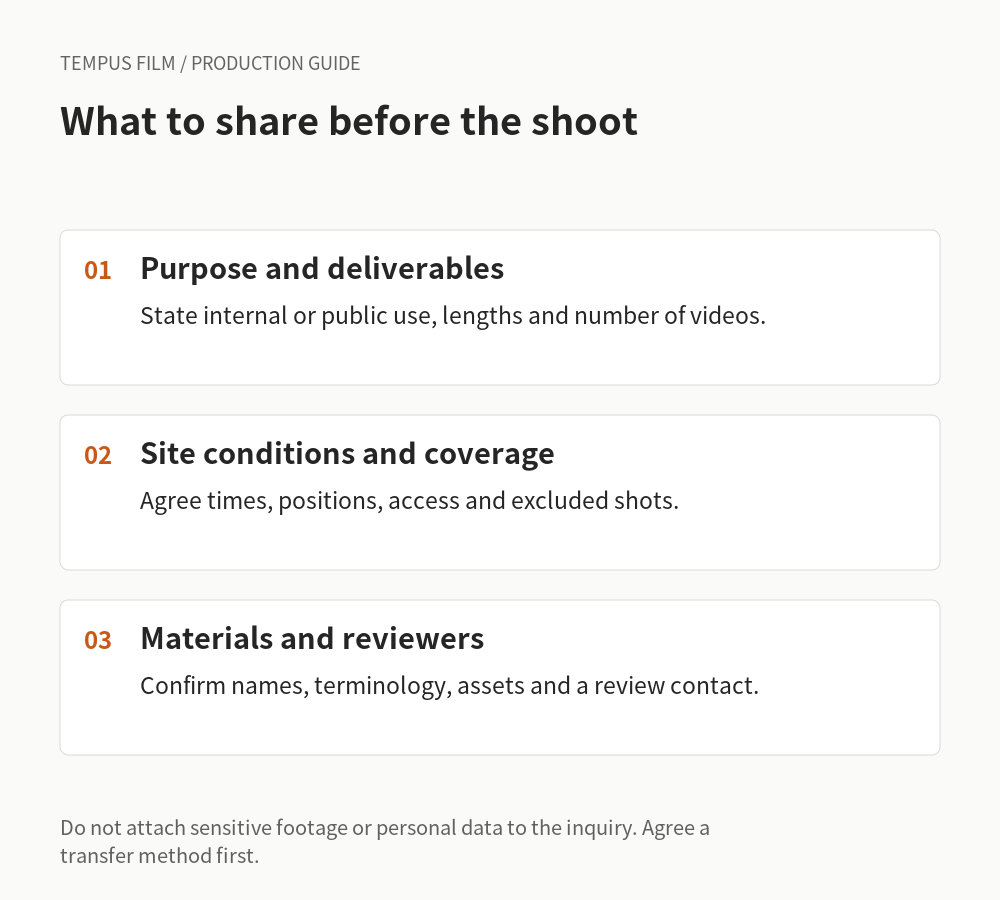
List the audience, purpose, permitted coverage and the required lengths and number of videos. Appoint a reviewer for names, terminology, logos and explanatory material. An initial inquiry can use anonymised production conditions and a file list instead of personal data or sensitive footage. If source material is needed, agree which files can be shared and how they will be transferred first.
Share the details you already have
Tell us the purpose, whether you need a new shoot or have existing footage, the required videos and your preferred dates. Mark undecided items as to be confirmed.
Discuss procedure filming and editing ↗Plan the images and spoken explanation together
Decide which shots are needed and when explanations will be recorded. Discuss whether location sound, a separate interview or later narration is included. Before filming, make a short test to check framing, reflections, noise and recording levels. For existing footage, share the approximate duration, file formats, separate audio and any missing or unclear sections. We cannot promise to recreate unrecorded images or speech. Alternative material and sections to omit are discussed after reviewing the files.
Choose contacts for content review and edit feedback
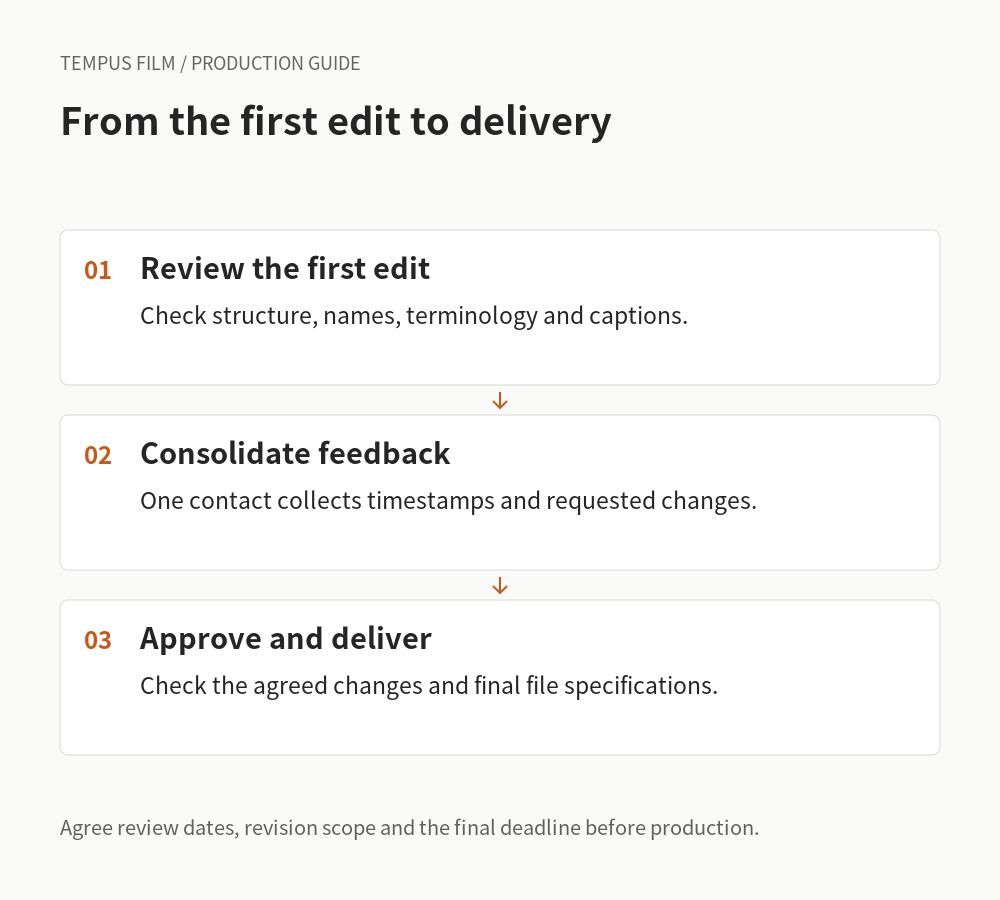
An institutional reviewer checks names, terminology, explanatory captions and the material intended for publication. Consolidate edit requests with timestamps in one list. The institution's designated reviewer should verify the procedural content and its wording. Agree when all material will be ready, when the first edit will be reviewed and the final delivery date. Revision rounds, scope changes and extra material should be addressed in the quotation.
List each finished video separately
Specify the use, target length, aspect ratio and number of videos. A complete record, an explanatory edit, a landscape main film and a vertical recap each need a defined structure. Agree names and captions, masking, logos and language versions as part of the scope. Request source footage or editing project files as separate deliverables if needed. Fees and timing follow a review of the site conditions, footage duration, number of edits and review scope.
Copy this inquiry brief
Institution / contact: Purpose / audience / publication channels: Work needed: filming only / editing only / filming and editing Preferred date / location / available filming time: Site contact / access and equipment conditions: Permitted coverage / people or screens to exclude: Existing footage / approximate duration / separate audio: Finished videos / number / lengths / aspect ratios: Captions / language versions / supplied material: Material availability / preferred deadline / budget range: Content reviewer / feedback coordinator: Use the general inquiry form for production requirements only. Do not enter patient names, medical records or links to sensitive footage. Agree a transfer method with your contact if material needs to be shared.
Tell us the purpose and filming or editing requirements
We will use the available details to identify the material and production scope to review. In the inquiry form, choose filming only, editing only or filming and editing.
Discuss a procedure video ↗